South Africa poised for record IPP deployments in 2026

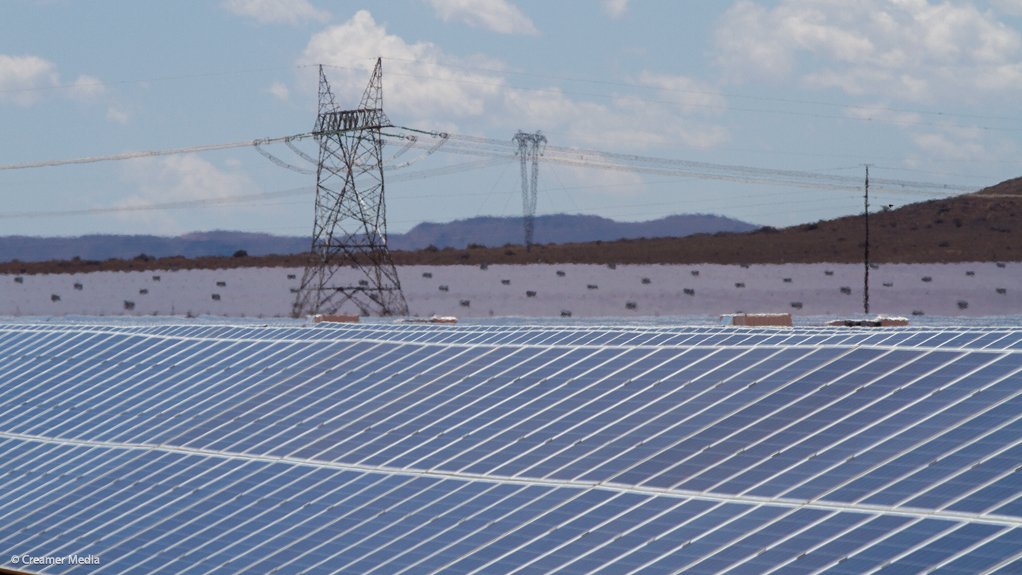


South Africa’s utility scale renewables and battery storage market is poised for a record year of installations, a new research note produced by the Power Futures Lab at the UCT Graduate School of Business shows.
Authors Dr Olakunle Alao and Dr Wikus Kruger state that eight projects with a combined capacity of 1 932 MW had already advanced to financial close by April 30, while a further 26 projects, representing 3 320 MW, are poised to achieve that milestone by year-end.
“If the full 2026 pipeline closes as expected, the year would total 34 financial closures representing about 5 252 MW of new renewable energy capacity – the highest single-year volume in South Africa’s history, surpassing the 3 562 MW recorded across 35 closures in 2024,” Alao and Kruger state.
They caution that realising the full pipeline in a single calendar year is ambitious, but argue that even a partial conversion would make 2026 exceptional by historical standards.
The majority of the projects moving towards construction are associated with public procurement processes, including bid windows six and seven of the Renewable Energy Independent Power Producer Procurement Programme (REIPPPP), and bid window two of the Battery Energy Storage Independent Power Producer Procurement Programme (BESIPPPP).
However, South Africa’s rapidly expanding private commercial and industrial (C&I) market also features strongly, with trader-intermediated offtake emerging as a key theme.
RISE OF TRADERS
“A defining feature of the 2026 deal flow is the role of licensed electricity traders as the intermediary between independent power producers (IPPs) and corporate electricity users.
“Where C&I procurement was initially organised around bilateral power purchase agreements between developer and end-user, the largest 2026 C&I transactions are now being aggregated through traders with diversified customer portfolios and dedicated trading licences from the National Energy Regulator of South Africa (Nersa).”
Of the six confirmed C&I closures, five are trader-intermediated, accounting for 1 219 MW, or about 80% of the 1 519 MW of confirmed C&I capacity.
The projects include Anthem’s 475 MW Notsi project, where the offtakers are NOA and Discovery Green; Mulilo’s 380 MW Beaufort West project where NOA is the offtaker; Mulilo’s 219 MW Orkney project, with Etana Energy as the offtaker; the 255 MW Thakadu project, which is being developed by Lyra Energy, a partnership of Scatec, Standard Bank and Stanlib; and the 25 MW Parsons PV project, where PowerX is the offtaker.
The remaining project is SOLA’s 300 MW Naos 1 PV plant, which is paired with 660 MWh of battery storage, and which is underpinned by a direct bilateral offtake arrangement with Sasol and Air Liquide.
Besides the rise of traders, the authors argue that the market is displaying evidence of a structural rather than a cyclical recovery, which they attribute to the policy continuity that emerged following the uncertainty created between 2015 and 2018 when Eskom placed a moratorium on buying electricity from IPPs.
The authors also conclude that the public procurement channel remains a significant driver, despite prevailing uncertainty about the future of the REIPPPP.
“A striking feature of the data is the continued weight of the public procurement programmes . . . Amid growing scepticism about REIPPPP’s continued role given the expanding C&I pipeline, the evidence here underlines that the programme remains decisive for the country – both as a volume driver and as the benchmark against which private-market tariffs are priced.”
The note highlights that Mulilo’s 337 MW Middlepunt PV project, selected during REIPPPP Bid Window 7, achieved the lowest tariff awarded under the programme to date of US$c 2.7/kWh.
The 2026 deal flow (confirmed and pipeline) splits almost six to four in favour of the public procurement programmes, with REIPPPP Bid Windows 6 and 7 together with BESIPPPP Bid Window 2 accounting for an estimated 3 112 MW across 20 projects.
The research note also highlights that the domestic capital market is now underwriting projects of up to 475 MW without foreign commercial debt.
The fact that all the closed projects secured domestic debt financing from South African commercial banks and development finance institutions is highlighted as “a notable indicator of local capital-market depth for projects of this scale”.
From a technology perspective, large-scale solar dominates, but the two battery projects point to the “rising bankability of storage assets in the South African grid context”.
Alao and Kruger describe the 2026 deal flow as encouraging for energy security and for accelerating decarbonisation.
They caution, however, that sustaining the trajectory will depend less on investor appetite, which is now well established, than on whether the electricity market reforms move at the same speed.
The National Transmission Company South Africa confirmed recently that 31.7 GW of generation customer connections were currently at a budget quotation phase or beyond, including 26 GW of utility-scale PV and wind capacity.
The State-owned entity argued, though, that there was a need to accelerate the integration of flexible generation to complement the variable renewables entering the network.
There is also ongoing uncertainty about the rules that will govern trading activities, with Nersa having recently refrained from releasing an updated draft amid criticism that the document included rules that were highly restrictive.
Article Enquiry
Email Article
Save Article
Feedback
To advertise email advertising@creamermedia.co.za or click here
Research Reports

Projects

Latest Multimedia
Latest News


Showroom
As one of South Africa's leading manufacturers, Bell Equipment distributes and exports its wide range of heavy equipment globally to mining,...
VISIT SHOWROOM
M and J Mining are leading suppliers of physical support systems as used by the underground mining industry. Our selection of products are not...
VISIT SHOWROOM

Press Office
Announcements
What's On
Subscribe to improve your user experience...
Option 1 (equivalent of R125 a month):
Receive a weekly copy of Creamer Media's Engineering News & Mining Weekly magazine
(print copy for those in South Africa and e-magazine for those outside of South Africa)
Receive daily email newsletters
Access to full search results
Access archive of magazine back copies
Access to Projects in Progress
Access to ONE Research Report of your choice in PDF format
Option 2 (equivalent of R375 a month):
All benefits from Option 1
PLUS
Access to Creamer Media's Research Channel Africa for ALL Research Reports, in PDF format, on various industrial and mining sectors
including Electricity; Water; Energy Transition; Hydrogen; Roads, Rail and Ports; Coal; Gold; Platinum; Battery Metals; etc.
Already a subscriber?
Forgotten your password?
Receive weekly copy of Creamer Media's Engineering News & Mining Weekly magazine (print copy for those in South Africa and e-magazine for those outside of South Africa)
➕
Recieve daily email newsletters
➕
Access to full search results
➕
Access archive of magazine back copies
➕
Access to Projects in Progress
➕
Access to ONE Research Report of your choice in PDF format
RESEARCH CHANNEL AFRICA
R4500 (equivalent of R375 a month)
SUBSCRIBEAll benefits from Option 1
➕
Access to Creamer Media's Research Channel Africa for ALL Research Reports on various industrial and mining sectors, in PDF format, including on:
Electricity
➕
Water
➕
Energy Transition
➕
Hydrogen
➕
Roads, Rail and Ports
➕
Coal
➕
Gold
➕
Platinum
➕
Battery Metals
➕
etc.
Receive all benefits from Option 1 or Option 2 delivered to numerous people at your company
➕
Multiple User names and Passwords for simultaneous log-ins
➕
Intranet integration access to all in your organisation